
CAT NAT Insurance Policies: One Year On. Where Does the Italian Market Stand?
CAT NAT Insurance Policies: One Year On. Where Does the Italian Market Stand?
Just over one year after the introduction of the mandatory insurance requirement for catastrophic risks, the Italian CAT NAT insurance market has entered a new phase. The introduction of the requirement represented a significant step not only for the insurance system, but also for the relationship between businesses, intermediaries and insurers.
The first key finding emerging from the monitoring carried out by IVASS (the Italian insurance supervisory authority) concerns the uptake of CAT NAT coverage. As of the end of April 2026, approximately 700.000 CAT NAT policies were in force, against an estimated potential market of around 4,5 million businesses. This figure highlights the significant growth achieved by the market, while also showing that there remains considerable room for further penetration.
The propensity to purchase coverage is also not uniform across different business sizes. Medium-sized and large companies show significantly higher levels of coverage, while penetration remains lower among small and medium-sized enterprises and, more generally, among smaller businesses. This difference may reflect the stronger risk management capabilities of larger companies, as well as the greater complexity and cost of risk assessment and transfer for smaller businesses.
Compliance may also have been affected by the absence of a clear and direct penalty for failing to purchase the required insurance. Although the legislation provides for a link between insurance compliance and access to certain public contributions and incentives, the absence of an immediate sanction may have reduced the perceived urgency to comply, particularly among smaller businesses.
From Compliance with the Requirement to Risk Management
The first year of implementation has shown that CAT NAT should not simply be regarded as an additional insurance requirement.
The legislation introduced minimum coverage for events such as earthquakes, floods and landslides. However, the market has rapidly developed beyond these minimum requirements. Insurers have started offering additional benefits, coverage extensions and, in some cases, advance indemnity payments to address immediate needs following a catastrophic event.
This highlights an important trend: CAT NAT insurance is progressively evolving from a simple compliance tool into a component of a broader property protection and business continuity programme.
Pricing and Conditions: There Is No Single CAT NAT Rate
Another key element highlighted by IVASS monitoring is the significant variability in premiums.
Pricing depends on several factors, including the geographical location of the risk, the value and characteristics of the insured assets, policy terms, conditions and exclusions. For this reason, a comparison based solely on premium does not provide a proper assessment of the quality and actual breadth of the coverage.
The consequence is clear: in the CAT NAT market, the ability to analyse policy wording and the overall structure of the coverage is at least as important as the price.
Outstanding Challenges
One year after the introduction of the requirement, however, there are still several areas in which the market will need to evolve.
These include the correct determination of insured values, greater clarity around exclusions, and the management of the economic consequences of a catastrophic event. There is also a need to develop a stronger culture of prevention: insurance protection is, in fact, only one of the tools through which a business can strengthen its resilience.
A New Phase for Businesses and Brokers
The first year has therefore enabled the Italian market to take an important step forward, but it can hardly be considered an end point.
The real challenge over the coming years will be to transform the CAT NAT requirement into a broader risk management culture. For businesses, this means understanding that purchasing insurance is not simply about complying with a legal requirement, but about protecting productive capacity and business continuity.
For intermediaries, and brokers in particular, this creates an advisory role that goes beyond simply obtaining a quotation: analysing geographical and property exposures, identifying appropriate insured values, ensuring that deductibles and sub-limits comply with statutory requirements, assessing coverage extensions, and developing a solution that is consistent with the company's risk profile.
After the first year, therefore, the question is no longer simply: “Does the company have a CAT NAT policy?”. It becomes: “Is the policy it has purchased actually adequate for the risk it needs to transfer?”
It is probably this shift from compliance to informed risk management that will shape the next phase in the evolution of the Italian CAT NAT insurance market.
News






























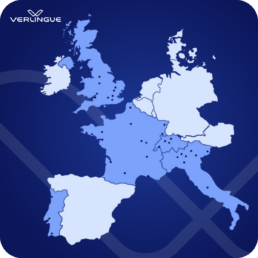
Verlingue consolidates its international offering by integrating Verlingue Portugal into the WBN network
Verlingue consolidates its international offering by integrating Verlingue Portugal into the WBN network
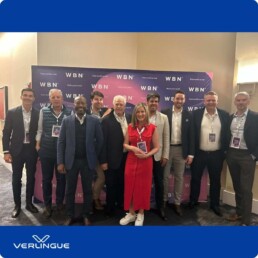
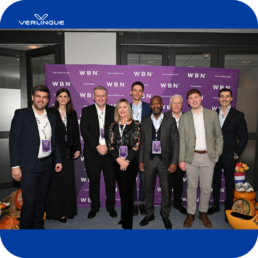
Verlingue, an insurance broker specialising in corporate protection, is strengthening its international presence by integrating Verlingue Portugal into the Worldwide Broker Network (WBN), the world's leading network of independent brokers. This development is part of the Adelaïde Group's Better Future 28 strategy, which aims to make Verlingue the leading independent, family-owned insurance broker in Europe.
“Today, companies expect support that combines a global vision with local expertise. Our European offices, our sector-specific expertise, and our global partner network enable us to support their international growth. The integration of Verlingue Portugal into WBN reinforces this setup to serve our customers and aligns perfectly with the ambitions of Better Future 28,” says Vincent Harel, CEO of Verlingue.
An international offering built on complementary expertise
As a founding member of WBN since its creation in 1989, Verlingue has progressively structured an international offering based on the complementary nature of its European locations, expertise, and partners. The broker relies on its teams in France, Great Britain, Switzerland, Portugal, and Italy, as well as a network of independent brokers operating in more than 100 countries.
This organisation allows Verlingue to assist its customers in defining their insurance strategy, identifying risks unique to each territory, and implementing solutions tailored to local realities. It combines a deep knowledge of markets and regulations with the ability to coordinate and manage operations on an international scale.
Verlingue’s international offering thus addresses the growing complexity and interdependence of risks faced by businesses, whether they relate to regulatory, geopolitical, climate, cyber issues, or employee benefits.
Verlingue Portugal joins the WBN network
As part of this international offering, the integration of Verlingue Portugal into the WBN network strengthens the system rolled out by Verlingue across Europe. It enables the subsidiary to expand its collaborations with fellow broker members of the network and contribute more directly to supporting companies operating in Portugal or the Iberian Peninsula.
For Verlingue's customers, this development makes it easier to align their insurance programmes across France, Portugal, and the other countries where they operate. It helps connect a global strategy with the specific regulatory and operational requirements of each market.
Verlingue Portugal’s membership in WBN helps reinforce the expertise, European footprint, and capacity to oversee risk management for its customers in the various countries where they operate.
About Verlingue
Verlingue is an insurance broker specialised in protecting businesses, and a subsidiary of the Adelaïde Group. Working alongside entrepreneurs, Verlingue’s goal is to harness corporate risk management and employee protection to drive its customers’ value creation and performance. With offices in France, Portugal, Switzerland, the United Kingdom and Italy, and through partners in over 100 countries, Verlingue works with its customers over the long term and at every instant to better understand and plan ahead for new risks, and develop simple yet effective solutions to protect their businesses (corporate risks) and their staff (supplementary social protection schemes and pensions).
1,600 employees, 600 of whom are based outside France
€3,400m in negotiated premium
Operating out of 5 countries in Europe
News

Business resilience: why sustainability is a strategic lever for navigating change
Business resilience: why sustainability is a strategic lever for navigating change
Sustainability and risk management
Businesses are operating in an environment where risks are becoming increasingly interconnected. Extreme weather events, regulatory change, market volatility, technological transformation and evolving expectations from clients, investors and stakeholders can all affect business continuity, reputation and competitiveness. For this reason, business resilience is not simply about reacting to unexpected events. It is about understanding their potential impact in advance and preparing the organisation to respond effectively.
From risk management to adaptability
Managing risk today means looking beyond individual exposures. It means understanding how environmental, social, regulatory and organisational factors can affect the business, and translating those insights into decisions, processes and preventive measures. From this perspective, resilience depends on an organisation’s ability to identify its vulnerabilities, strengthen business continuity and adapt when circumstances change. Climate change, resource management, regulatory developments and new supply chain requirements are already affecting the way businesses operate.
The link between sustainability and resilience
Integrating ESG considerations into business management can help make risks more visible, including those that until recently may have been seen as marginal or remote. Measuring impact, monitoring relevant indicators and setting improvement targets can also provide useful information for assessing exposures, dependencies and vulnerabilities. Sustainability, therefore, is not only about reporting or compliance. It can also become a valuable tool for understanding risk and supporting better decision-making. This is where sustainability and resilience increasingly come together: in the ability to turn data and information into more informed choices.
A journey that also applies to Verlingue
The same approach also guides Verlingue’s own ESG journey. The EcoVadis and Greenly assessments have enabled the company to measure aspects of its performance in a more structured way and identify areas where further progress can be made. They are not an end point, but useful tools for understanding how far the organisation has come and helping to shape the next steps.
Supporting businesses in a changing environment
For Verlingue, supporting businesses in managing risk also means helping them understand how their exposures are evolving. Sustainability, governance, business continuity and prevention are becoming increasingly interconnected. Resilience is built through this ability to understand risk, monitor how it changes and prepare the organisation to respond with greater awareness.
News
Environment and waste management
Environment and waste management
Illegally dumped waste: what does the environment monistry’s latest guidance mean for local authoritirs?
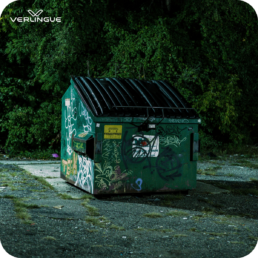
Circular No. 3/2026 from Italy’s Ministry of the Environment and Energy Security brings renewed attention to the management of waste dumped on public land or land accessible to the public. The principle is clear: this waste is always treated as municipal waste, regardless of its origin or initial classification.
As a result, local authorities remain responsible for its removal, both where those responsible for dumping it cannot be identified and where the operators responsible at the time fail to act.
Classifying waste through visual inspection
The Circular refers to the guidelines issued by Italy’s National Environmental Protection System (SNPA Resolution No. 105/2021) and confirms that dumped waste may be classified through visual inspection.
This simplified approach allows the appropriate European List of Waste (LoW) code to be assigned on the basis of readily observable characteristics, without **laboratory testing**, provided the waste is clearly identifiable, uniform in composition and shows no signs of hazardous properties or uncertainty.
This approach cannot be used for burnt waste, waste containing asbestos or potentially hazardous materials, or in any other circumstances where a reliable classification cannot be established.
Waste transport: more suitable vehicles and greater efficiency
The main development introduced by the Circular is that dumped waste may also be collected using vehicles registered under Categories 4 and 5 of Italy’s National Register of Environmental Operators. These include hooklift trucks, lorries fitted with cranes and other vehicles authorised to carry non-hazardous or hazardous waste commercially, provided the correct LoW code has been assigned beforehand.
The measure gives local authorities a wider range of operational options, allowing them to use vehicles better suited to the waste being collected while maintaining high standards of environmental safety and improving the efficiency of removal operations.
Overall, the Circular confirms a more flexible approach to managing dumped waste, providing local authorities with practical guidance on both classification and transport.
The requirements for accurate waste identification and traceability remain in place. Within this framework, local authorities now have more effective tools to carry out prompt, safe removal operations in compliance with environmental legislation.
Further reading:
- Circular No. 3/2026 — Italian Ministry of the Environment and Energy Security
News

Public procurement and electronic tendering
Public procurement and electronic tendering
Bid submission prevented by platform delays: bydder must be readmitted
The digitalisation of tender procedures is an increasingly important issue for contracting authorities.
A recent judgment by the Umbria Regional Administrative Court (TAR), No. 854/2025, addresses a practical question: what happens when a bidder uploads its tender documents within the deadline but cannot complete the submission because of delays or technical issues affecting the e-procurement platform?
The case
The dispute arose from a tender procedure launched by the Lazio Region through an e-procurement platform. A bidder had begun uploading its tender documents within the prescribed deadline.
During the upload, however, an issue involving the processing of a digitally signed file in “p7m” format slowed down the system, preventing the bidder from completing the submission on time.
The contracting authority rejected the bidder’s request to be readmitted, citing the principle of bidder responsibility, under which tenderers are expected to allow sufficient time before the deadline to complete their submissions.
The bidder challenged the decision before the Regional Administrative Court, which upheld the appeal on the following grounds.
The Court’s reasoning
The Court held that a bidder is entitled to an opportunity to complete its submission after the deadline not only where a platform malfunction has been established, but also where the cause of the delay cannot be determined with certainty.
In such circumstances, the risk associated with an “unknown cause” rests with the contracting authority, which selected and provided the platform used for the tender procedure.
The principle of bidder responsibility, together with provisions in the tender rules advising bidders to submit well before the deadline, cannot result in all technical risk being transferred to the bidder.
A bidder that began uploading its documents in good time cannot therefore be excluded if platform delays or technical issues prevented it from completing the submission, even where the precise cause cannot be established.
Further reading:
- Umbria Regional Administrative Court (TAR), Perugia, Judgment No. 854/2025
News

ESG: more than a recognition. A commitment shared across Verlingue
ESG: more than a recognition. A commitment shared across Verlingue
Sustainability and company culture
When sustainability is discussed, attention often focuses on ratings, badges and assessments. In reality, behind every recognition lies the day-to-day contribution of people across the organisation.
Receiving the EcoVadis Committed Badge and the Greenly Gold Medal reflects a broader journey involving several business functions, each contributing data, procedures, policies and activities already embedded within the organisation.
Human Resources, Compliance, IT, Finance, Management and Procurement all contributed to the collection and analysis work needed to build a more structured picture of Verlingue’s ESG performance.
In recent years, the Adelaïde Group has invested in strengthening ESG awareness through dedicated training programmes and initiatives, with the aim of progressively embedding environmental, social and governance principles into everyday business activities.
For Verlingue, ESG means acting with integrity and transparency, supporting people’s wellbeing and development, progressively reducing its environmental impact and building responsible relationships with clients, partners and suppliers.
The results achieved in 2026 therefore represent one stage in a broader journey, which continues to evolve through the contribution of different teams across the business.
Assessments help measure progress. It is people, every day, who make that progress tangible.
News

Insurance and public procurement
Insurance and public procurement
Insurance for designers and design reviewers: public authotities must cover any shortfall in technical incentive funding
The recent ANAC Opinion No. 20/2026 has renewed debate over mandatory insurance cover for public sector employees performing technical duties, particularly where funding allocated to technical incentives is insufficient to cover the premiums. A brief overview of the legal framework helps explain the significance of this clarification.
Mandatory insurance and the scope of liability for losses to public funds
Under the established position of Italy’s Court of Auditors, most recently confirmed by Resolution No. 19/2025 of its Section of Autonomies, Article 45 of Legislative Decree No. 36/2023 requires a share of the resources allocated to technical incentives - 20% of the incentive fund - to be used to finance mandatory insurance cover for designers and design reviewers, namely employees carrying out the activities listed in Annex I.10.
In the same ruling, the Court clarified that public authorities must insure their in-house designers and design reviewers against damage arising from the performance of their duties, covering both ordinary and gross negligence. The cover excludes losses to public funds that are not directly linked to design and review activities, which remain subject to the general prohibition under Law No. 244/2007. This distinction defines the scope of insurable liability for losses to public funds.
What happens when the funds set aside do not cover the full cost of the policy?
In Opinion No. 20 of 7 July 2026, ANAC clarified that the funds provided for under Article 45 are not the sole source of financing. Where they are insufficient, the public authority must still ensure that insurance cover is in place, meeting the shortfall from its own budget and including the additional funding in the provision for other project costs within the overall project budget.
ANAC therefore confirms that insuring designers and design reviewers is an obligation for the public authority, even where the resources allocated to technical incentives are insufficient.
In these circumstances, the authority must make up the shortfall from its own resources, ensuring that the protection required by Italy’s Public Procurement Code remains in place.
Further reading:
- ANAC Opinion No. 20 of 7 July 2026
News
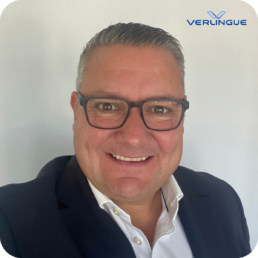
Verlingue acquires Corpad and strengthens its Employee Benefits business in the UK
Verlingue acquires Corpad and strengthens its Employee Benefits business in the UK
The acquisition builds on the growth path established with Brunsdon Employee Benefits and EBCam, bringing new professionals into the Group
Verlingue is continuing its growth strategy in the UK with the acquisition of Corpad Employee Benefits Limited, an employee benefits consultancy working with employers across the country.
The transaction is part of a broader development strategy that has seen Verlingue steadily strengthen its Employee Benefits business in recent years. Brunsdon Employee Benefits was integrated in 2023, followed by the acquisition of EBCam in December 2025. With Corpad joining the Group, Verlingue aims to further expand its specialist expertise and its ability to support employers in the design and management of employee benefits programmes.
New professionals join the Verlingue team
Corpad works with UK employers to develop employee benefits programmes tailored to each organisation’s objectives, workforce and culture. Its approach is based on personalised advice and long-term client relationships.
Following the acquisition, the Corpad professionals will join Verlingue, including Employee Benefits consultants and colleagues specialising in client support and relationship management. The team will also begin operating under the Verlingue brand.
The integration will therefore add further expertise and resources to Verlingue’s UK business, which employs more than 200 people across a network of offices throughout the country.
A growth strategy focused on Employee Benefits
The acquisition of Corpad is the third significant step in just a few years in the development of Verlingue’s Employee Benefits business in the UK.
The strategy combines business growth, investment in specialist expertise and the integration of firms whose advisory approach is aligned with Verlingue’s own way of working. Over the coming months, the focus will be on ensuring a smooth transition for clients and colleagues while creating new opportunities for collaboration and knowledge sharing across the wider business.
“This acquisition is another important step in our growth strategy and further strengthens our Employee Benefits proposition,” said Mike Latham, CEO of Verlingue in the UK, also highlighting the value of the people and expertise joining the organisation.
For Stuart Stroud, CEO of Corpad Employee Benefits Limited, joining Verlingue will enable the business to continue developing the client relationships it has built over the years while benefiting from the wider scale and expertise available within the Group.
Employee Benefits and international growth
The transaction forms part of the wider European development of Verlingue and the Adelaïde Group, of which the broker is part, and reflects the growing role of Employee Benefits alongside insurance broking and risk management activities.
For employers, benefits programmes are increasingly linked to the need to develop solutions that reflect the characteristics of their organisation and workforce. In this context, the integration of Corpad is intended to strengthen Verlingue’s ability to support UK employers through specialist expertise, advisory capabilities and additional dedicated resources.
News

D&O insurance: when it is needed and what it covers
D&O insurance: when it is needed and what it covers
Protection for directors, officers and corporate bodies exposed to personal liability
Running a company means making decisions. Some are operational, others strategic. All of them, however, can have consequences. D&O insurance, short for Directors’ and Officers’ Liability Insurance, is designed to protect directors, officers, statutory auditors and senior decision-makers against claims arising from acts carried out in the performance of their duties.
One point is often underestimated: a company’s limited liability does not always provide personal protection for those who manage it. Under the Italian Civil Code, directors are required to perform their duties with the diligence required by the nature of their role and by their specific expertise. If they fail to do so, they may be held liable for damages towards the company, its creditors, shareholders or third parties.
What D&O insurance is for
It does not cover normal business risk, namely the possibility that a corporate decision may fail to deliver the expected financial results. Instead, it responds when that decision gives rise to a liability claim against the person who made, approved or authorised it.
D&O cover can become relevant in many situations: extraordinary corporate transactions, business crises, dealings with investors and creditors, employment-related issues, insolvency procedures, errors in corporate communications, breaches of regulations or investigations by public authorities.
For more structured businesses, D&O insurance is an important tool to protect directors, statutory auditors and senior managers, with possible extensions also covering damage suffered directly by the company, including reputational issues where provided for in the policy.
What D&O insurance covers
A well-structured D&O policy may cover, within the limits set out in the contract:
- legal expenses and defence costs, including civil, administrative or criminal proceedings where insurable;
- compensation payable to third parties, following judgments or settlements approved by the insurer;
- investigation costs, in the event of formal investigations by competent authorities;
- protection of personal assets belonging to directors, officers, statutory auditors and other insured individuals;
- cover for the company, where the business advances or reimburses costs incurred by its managers;
- possible extensions for reputational damage, employment practices liability, accidental pollution or business crisis scenarios, where included in the policy wording.
D&O is therefore a form of financial liability insurance. In general terms, it concerns economic or financial losses, rather than damage to property or bodily injury, unless specific contractual extensions apply.
When D&O insurance is really needed
It becomes particularly important when an organisation has a complex governance structure, relationships with lenders or investors, M&A activity, exposure to strategic suppliers and clients, or when directors are required to make decisions with significant financial impact.
The risk is not only losing a claim. It is having to deal with one. Even an unfounded allegation can generate legal costs, absorb management time, create reputational pressure and expose individuals to personal uncertainty. For this reason, D&O insurance should not be seen merely as emergency cover, but as a governance and managerial continuity tool.
What to assess before taking out a D&O policy
Not all D&O policies are the same. Before taking out cover, companies should carefully assess:
- policy limit and sub-limits;
- insured persons;
- retroactive cover and discovery period after expiry;
- exclusions;
- defence costs cover;
- extensions for subsidiaries or associated companies;
- territorial scope;
- claims handling procedures.
This is where the role of the broker becomes essential. Verlingue supports companies in analysing their exposure, understanding governance-related liabilities and building insurance programmes aligned with their size, sector, corporate structure and risk profile.
News
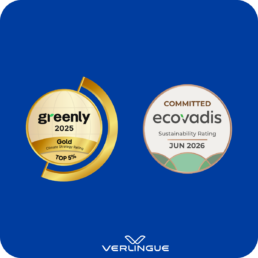
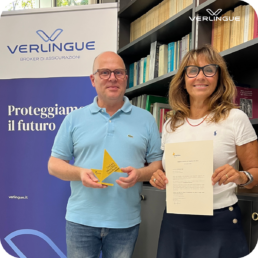
Verlingue receives the EcoVadis Committed Badge and Greenly Gold Medal
Verlingue receives the EcoVadis Committed Badge and Greenly Gold Medal
The two recognitions mark another step forward in the company’s ESG journey, from assessing sustainability performance to measuring its carbon footprint.
Verlingue Italy is continuing to strengthen its sustainability approach, receiving the EcoVadis Committed Badge and the Greenly Gold Medal. The two recognitions provide the company with a clearer view of the progress made so far and the areas where further improvement can be achieved.
The EcoVadis assessment evaluates corporate sustainability performance across four key areas: environment, labour and human rights, ethics, and sustainable procurement. Verlingue achieved an overall score of 61/100, placing the company in the 56th percentile.
On the environmental front, Verlingue also received the Greenly Gold Medal as part of its work to measure and manage its carbon footprint. The assessment enabled the company to quantify its emissions and identify the main sources of impact to address going forward.
These results therefore represent a starting point for the next phase of Verlingue’s sustainability journey. The company is now working to turn the findings from the assessments into concrete actions, from monitoring ESG KPIs to involving different business functions and suppliers.
This work forms part of the wider ESG strategy of the Adelaïde Group, which aims to progressively integrate sustainability, responsibility and long-term value creation into its business approach.