
Environment and waste management
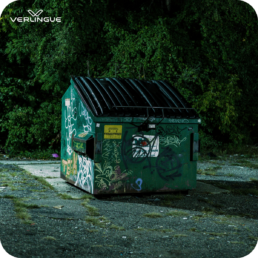
Illegally dumped waste: what does the environment monistry’s latest guidance mean for local authoritirs?
Circular No. 3/2026 from Italy’s Ministry of the Environment and Energy Security brings renewed attention to the management of waste dumped on public land or land accessible to the public. The principle is clear: this waste is always treated as municipal waste, regardless of its origin or initial classification.As a result, local authorities remain responsible for its removal, both where those responsible for dumping it cannot be identified and where the operators responsible at the time fail to act. Classifying waste through visual inspectionThe Circular refers to the guidelines issued by Italy’s National Environmental Protection System (SNPA Resolution No. 105/2021) and confirms that dumped waste may be classified through visual inspection.This simplified approach allows the appropriate European List of Waste (LoW) code to be assigned on the basis of readily observable characteristics, without **laboratory testing**, provided the waste is clearly identifiable, uniform in composition and shows no signs of hazardous properties or uncertainty.This approach cannot be used for burnt waste, waste containing asbestos or potentially hazardous materials, or in any other circumstances where a reliable classification cannot be established. Waste transport: more suitable vehicles and greater efficiencyThe main development introduced by the Circular is that dumped waste may also be collected using vehicles registered under Categories 4 and 5 of Italy’s National Register of Environmental Operators. These include hooklift trucks, lorries fitted with cranes and other vehicles authorised to carry non-hazardous or hazardous waste commercially, provided the correct LoW code has been assigned beforehand.The measure gives local authorities a wider range of operational options, allowing them to use vehicles better suited to the waste being collected while maintaining high standards of environmental safety and improving the efficiency of removal operations.Overall, the Circular confirms a more flexible approach to managing dumped waste, providing local authorities with practical guidance on both classification and transport.The requirements for accurate waste identification and traceability remain in place. Within this framework, local authorities now have more effective tools to carry out prompt, safe removal operations in compliance with environmental legislation. Further reading:- Circular No. 3/2026 — Italian Ministry of the Environment and Energy Security