

Insurance and public procurement
Insurance and public procurement
Insurance for designers and design reviewers: public authotities must cover any shortfall in technical incentive funding
The recent ANAC Opinion No. 20/2026 has renewed debate over mandatory insurance cover for public sector employees performing technical duties, particularly where funding allocated to technical incentives is insufficient to cover the premiums. A brief overview of the legal framework helps explain the significance of this clarification.
Mandatory insurance and the scope of liability for losses to public funds
Under the established position of Italy’s Court of Auditors, most recently confirmed by Resolution No. 19/2025 of its Section of Autonomies, Article 45 of Legislative Decree No. 36/2023 requires a share of the resources allocated to technical incentives - 20% of the incentive fund - to be used to finance mandatory insurance cover for designers and design reviewers, namely employees carrying out the activities listed in Annex I.10.
In the same ruling, the Court clarified that public authorities must insure their in-house designers and design reviewers against damage arising from the performance of their duties, covering both ordinary and gross negligence. The cover excludes losses to public funds that are not directly linked to design and review activities, which remain subject to the general prohibition under Law No. 244/2007. This distinction defines the scope of insurable liability for losses to public funds.
What happens when the funds set aside do not cover the full cost of the policy?
In Opinion No. 20 of 7 July 2026, ANAC clarified that the funds provided for under Article 45 are not the sole source of financing. Where they are insufficient, the public authority must still ensure that insurance cover is in place, meeting the shortfall from its own budget and including the additional funding in the provision for other project costs within the overall project budget.
ANAC therefore confirms that insuring designers and design reviewers is an obligation for the public authority, even where the resources allocated to technical incentives are insufficient.
In these circumstances, the authority must make up the shortfall from its own resources, ensuring that the protection required by Italy’s Public Procurement Code remains in place.
Further reading:
- ANAC Opinion No. 20 of 7 July 2026
News

































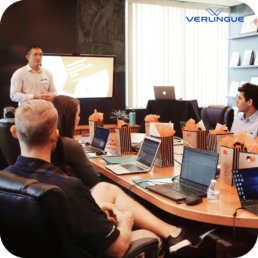

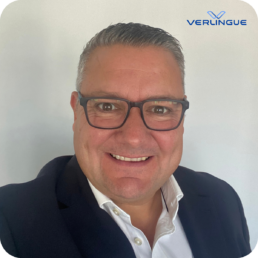
Verlingue acquires Corpad and strengthens its Employee Benefits business in the UK
Verlingue acquires Corpad and strengthens its Employee Benefits business in the UK
The acquisition builds on the growth path established with Brunsdon Employee Benefits and EBCam, bringing new professionals into the Group
Verlingue is continuing its growth strategy in the UK with the acquisition of Corpad Employee Benefits Limited, an employee benefits consultancy working with employers across the country.
The transaction is part of a broader development strategy that has seen Verlingue steadily strengthen its Employee Benefits business in recent years. Brunsdon Employee Benefits was integrated in 2023, followed by the acquisition of EBCam in December 2025. With Corpad joining the Group, Verlingue aims to further expand its specialist expertise and its ability to support employers in the design and management of employee benefits programmes.
New professionals join the Verlingue team
Corpad works with UK employers to develop employee benefits programmes tailored to each organisation’s objectives, workforce and culture. Its approach is based on personalised advice and long-term client relationships.
Following the acquisition, the Corpad professionals will join Verlingue, including Employee Benefits consultants and colleagues specialising in client support and relationship management. The team will also begin operating under the Verlingue brand.
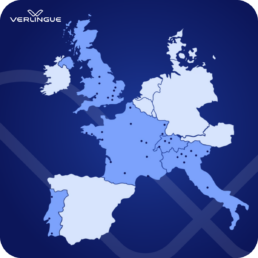
The integration will therefore add further expertise and resources to Verlingue’s UK business, which employs more than 200 people across a network of offices throughout the country.
A growth strategy focused on Employee Benefits
The acquisition of Corpad is the third significant step in just a few years in the development of Verlingue’s Employee Benefits business in the UK.
The strategy combines business growth, investment in specialist expertise and the integration of firms whose advisory approach is aligned with Verlingue’s own way of working. Over the coming months, the focus will be on ensuring a smooth transition for clients and colleagues while creating new opportunities for collaboration and knowledge sharing across the wider business.
“This acquisition is another important step in our growth strategy and further strengthens our Employee Benefits proposition,” said Mike Latham, CEO of Verlingue in the UK, also highlighting the value of the people and expertise joining the organisation.
For Stuart Stroud, CEO of Corpad Employee Benefits Limited, joining Verlingue will enable the business to continue developing the client relationships it has built over the years while benefiting from the wider scale and expertise available within the Group.
Employee Benefits and international growth
The transaction forms part of the wider European development of Verlingue and the Adelaïde Group, of which the broker is part, and reflects the growing role of Employee Benefits alongside insurance broking and risk management activities.
For employers, benefits programmes are increasingly linked to the need to develop solutions that reflect the characteristics of their organisation and workforce. In this context, the integration of Corpad is intended to strengthen Verlingue’s ability to support UK employers through specialist expertise, advisory capabilities and additional dedicated resources.
News

D&O insurance: when it is needed and what it covers
D&O insurance: when it is needed and what it covers
Protection for directors, officers and corporate bodies exposed to personal liability
Running a company means making decisions. Some are operational, others strategic. All of them, however, can have consequences. D&O insurance, short for Directors’ and Officers’ Liability Insurance, is designed to protect directors, officers, statutory auditors and senior decision-makers against claims arising from acts carried out in the performance of their duties.
One point is often underestimated: a company’s limited liability does not always provide personal protection for those who manage it. Under the Italian Civil Code, directors are required to perform their duties with the diligence required by the nature of their role and by their specific expertise. If they fail to do so, they may be held liable for damages towards the company, its creditors, shareholders or third parties.
What D&O insurance is for
It does not cover normal business risk, namely the possibility that a corporate decision may fail to deliver the expected financial results. Instead, it responds when that decision gives rise to a liability claim against the person who made, approved or authorised it.
D&O cover can become relevant in many situations: extraordinary corporate transactions, business crises, dealings with investors and creditors, employment-related issues, insolvency procedures, errors in corporate communications, breaches of regulations or investigations by public authorities.
For more structured businesses, D&O insurance is an important tool to protect directors, statutory auditors and senior managers, with possible extensions also covering damage suffered directly by the company, including reputational issues where provided for in the policy.
What D&O insurance covers
A well-structured D&O policy may cover, within the limits set out in the contract:
- legal expenses and defence costs, including civil, administrative or criminal proceedings where insurable;
- compensation payable to third parties, following judgments or settlements approved by the insurer;
- investigation costs, in the event of formal investigations by competent authorities;
- protection of personal assets belonging to directors, officers, statutory auditors and other insured individuals;
- cover for the company, where the business advances or reimburses costs incurred by its managers;
- possible extensions for reputational damage, employment practices liability, accidental pollution or business crisis scenarios, where included in the policy wording.
D&O is therefore a form of financial liability insurance. In general terms, it concerns economic or financial losses, rather than damage to property or bodily injury, unless specific contractual extensions apply.
When D&O insurance is really needed
It becomes particularly important when an organisation has a complex governance structure, relationships with lenders or investors, M&A activity, exposure to strategic suppliers and clients, or when directors are required to make decisions with significant financial impact.
The risk is not only losing a claim. It is having to deal with one. Even an unfounded allegation can generate legal costs, absorb management time, create reputational pressure and expose individuals to personal uncertainty. For this reason, D&O insurance should not be seen merely as emergency cover, but as a governance and managerial continuity tool.
What to assess before taking out a D&O policy
Not all D&O policies are the same. Before taking out cover, companies should carefully assess:
- policy limit and sub-limits;
- insured persons;
- retroactive cover and discovery period after expiry;
- exclusions;
- defence costs cover;
- extensions for subsidiaries or associated companies;
- territorial scope;
- claims handling procedures.
This is where the role of the broker becomes essential. Verlingue supports companies in analysing their exposure, understanding governance-related liabilities and building insurance programmes aligned with their size, sector, corporate structure and risk profile.
News
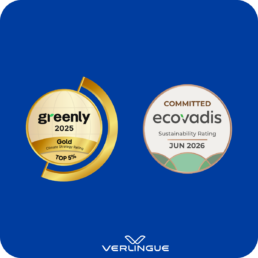
Verlingue receives the EcoVadis Committed Badge and Greenly Gold Medal
Verlingue receives the EcoVadis Committed Badge and Greenly Gold Medal
The two recognitions mark another step forward in the company’s ESG journey, from assessing sustainability performance to measuring its carbon footprint.
Verlingue Italy is continuing to strengthen its sustainability approach, receiving the EcoVadis Committed Badge and the Greenly Gold Medal. The two recognitions provide the company with a clearer view of the progress made so far and the areas where further improvement can be achieved.
The EcoVadis assessment evaluates corporate sustainability performance across four key areas: environment, labour and human rights, ethics, and sustainable procurement. Verlingue achieved an overall score of 61/100, placing the company in the 56th percentile.
On the environmental front, Verlingue also received the Greenly Gold Medal as part of its work to measure and manage its carbon footprint. The assessment enabled the company to quantify its emissions and identify the main sources of impact to address going forward.
These results therefore represent a starting point for the next phase of Verlingue’s sustainability journey. The company is now working to turn the findings from the assessments into concrete actions, from monitoring ESG KPIs to involving different business functions and suppliers.
This work forms part of the wider ESG strategy of the Adelaïde Group, which aims to progressively integrate sustainability, responsibility and long-term value creation into its business approach.
News

Verlingue supports the Veneto Festival 2026
Verlingue supports the Veneto Festival 2026
For the second year running, Verlingue is sponsoring the International G. Tartini Festival, organised by I Solisti Veneti
Verlingue is renewing its support for the Veneto Festival for the second consecutive year. Now in its 56th edition, the International Giuseppe Tartini Festival is organised by I Solisti Veneti, conducted by Giuliano Carella. This partnership confirms Verlingue’s commitment to the local area, to culture and to initiatives that create lasting value for communities.
The 2026 edition of the Veneto Festival runs from 25 May to 20 September and features a rich programme inspired by the theme “Music, art and architecture from Veneto to the world”. This phrase captures the spirit of the festival: a musical journey starting in Padua and reaching some of the most significant artistic and cultural venues in Italy and Europe, from the Auditorium Pollini to the Basilica of Saint Anthony, from the Teatro Olimpico in Vicenza to the Sale Apollinee at Teatro La Fenice in Venice, as well as Pirano, Rimini and Constanța.
The programme includes twenty concerts, ranging from Baroque and Classical music to the twentieth century, alongside special projects that bring together music, theatre, memory and architecture. Highlights include the opening concert in Padua with Lilly Jørstad, the tribute to the 80th anniversary of the Italian Republic at the Teatro Olimpico in Vicenza, the three modern-day premiere performances of Baldassare Galuppi’s Mundi Salus, the “Musica degenerata” concert at La Fenice and “Grammelot musicale”, marking the centenary of Dario Fo’s birth.
The cultural significance of the Festival is further strengthened by the history of I Solisti Veneti, the orchestra founded in 1959 by Claudio Scimone and now led by Giuliano Carella. Over more than 65 years of activity, the ensemble has brought the music of Veneto to over 90 countries, performing more than 6,000 concerts, recording over 350 albums, CDs and DVDs, and receiving major international awards, including a Grammy Award in Los Angeles.
For Verlingue, supporting this initiative means embracing a shared vision: protecting the future is not only about helping companies, professionals and social organisations manage risk, but also about preserving the cultural heritage that gives communities their identity. For over forty years, Verlingue has supported businesses and organisations by developing tailored insurance solutions. Its sponsorship of the Veneto Festival is part of this same approach, strengthening the connection between business, culture and social responsibility.
News

Insurance broker or insurance agent: what is the difference for businesses?
Insurance broker or insurance agent: what is the difference for businesses?
Two different roles in insurance distribution, with practical implications for corporate risk management
In everyday language, the terms insurance broker and insurance agent are often used interchangeably. In practice, however, they refer to two different roles, with distinct mandates, responsibilities and relationships with the client. This is not just a technical distinction: it can affect the way a business analyses its risks, compares available cover and builds an insurance programme aligned with its needs.
According to the classification of the Single Register of Insurance and Reinsurance Intermediaries, maintained by IVASS, agents are listed in section A and act in the name of, or on behalf of, one or more insurance companies. Brokers, on the other hand, are listed in section B, act on the client’s instructions and do not have powers to represent insurance companies.
What does an insurance agent do?
This model can be effective when the insurance requirement is clear, limited in scope and aligned with the offering of the insurer represented. An agent has in-depth knowledge of the products provided by their principal and can support the client during policy placement and management.
For a business with more complex risks, however, the limitation lies in the market perspective. The analysis tends to focus on the solutions offered by the represented insurers, rather than on the wider insurance market.
What does an insurance broker do?
For a company, this means working with an adviser whose starting point is not the product, but the risk profile. That difference is significant. A manufacturing business, a service company, an international group or a public body does not simply need to “buy a policy”: it needs to understand which exposures should be transferred to the insurance market, which should be retained, and which should be mitigated through organisational, contractual or technical measures.
Mandate, client interest and advisory role
In summary:
- an agent acts in the name of, or on behalf of, one or more insurance companies;
- a broker acts on the client’s instructions;
- an agent offers solutions linked to the mandate received from insurers;
- a broker searches the market for cover that best matches the client’s needs;
- both are regulated intermediaries and must be registered with the RUI.
The Single Register of Intermediaries is publicly accessible and allows clients to verify whether an individual or firm is authorised to carry out insurance distribution activities in Italy.
Why a broker is strategic for corporate risk management
This is where the broker plays a key role: assessing the risk before assessing the policy. A broker can support the company in analysing exposures relating to civil liability, cyber risk, property, D&O, fleets, transport, credit, employee benefits and international programmes. The value lies not only in comparing offers, but in building an integrated insurance strategy.
Verlingue: insurance advisory services for businesses
Verlingue is an Italian insurance broker and part of international insurance broking group Verlingue, a company of the Adelaïde Group. It supports businesses through risk management and risk assessment services, developing tailored insurance programmes to meet their specific needs. The objective is to help companies make more informed decisions, turning insurance from a simple requirement into a tool for protection, stability and growth.
News
Verlingue supports Atlantide Pallavolo Brescia
Verlingue supports Atlantide Pallavolo Brescia
The partnership supported the Brescia-based club’s sporting project throughout the 2025/2026 season
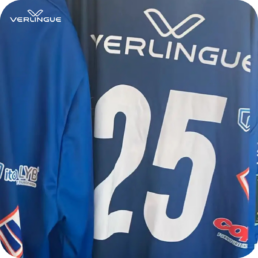
During the 2025/2026 season, Verlingue supported Atlantide Pallavolo Brescia as an official Supporter and Partner, contributing to the club’s sporting project.
The partnership reflects Verlingue’s strong ties with the Brescia area and with the organisations that contribute to its social and community life. Volleyball embodies values such as teamwork, preparation, responsibility and long-term commitment, which are equally relevant in professional and business environments.
At the end of the season, Atlantide Pallavolo Brescia presented Verlingue with a commemorative shirt as a gesture of thanks and recognition for the support provided.
News
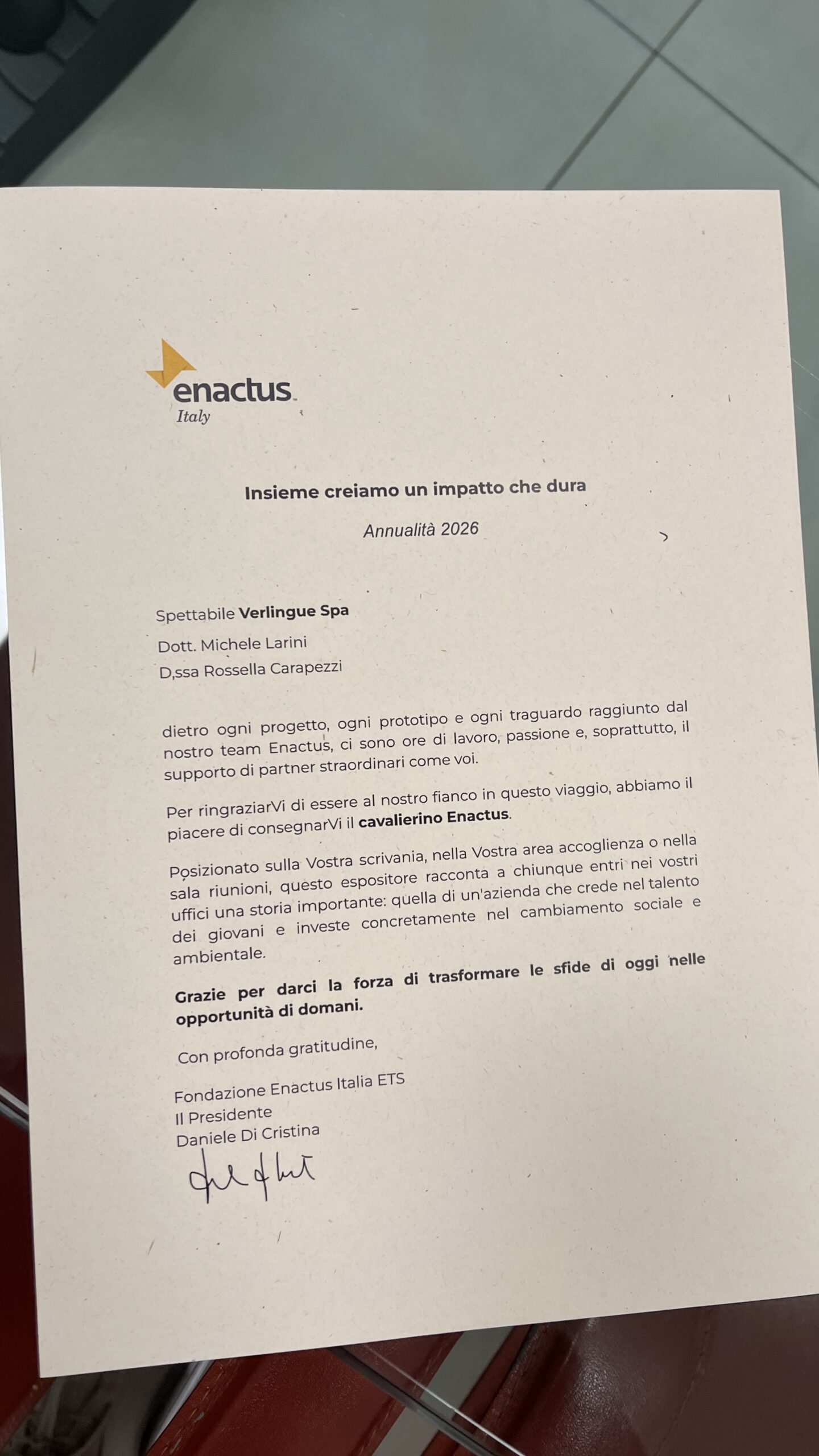
Enactus Italia presents Verlingue with the “Enactus statuette”
Enactus Italia presents Verlingue with the “Enactus statuette”
The recognition reflects Verlingue’s support for projects dedicated to young people and to creating lasting social and environmental impact
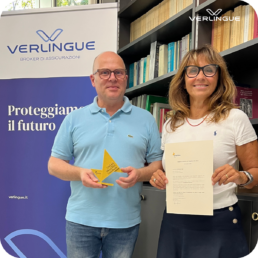
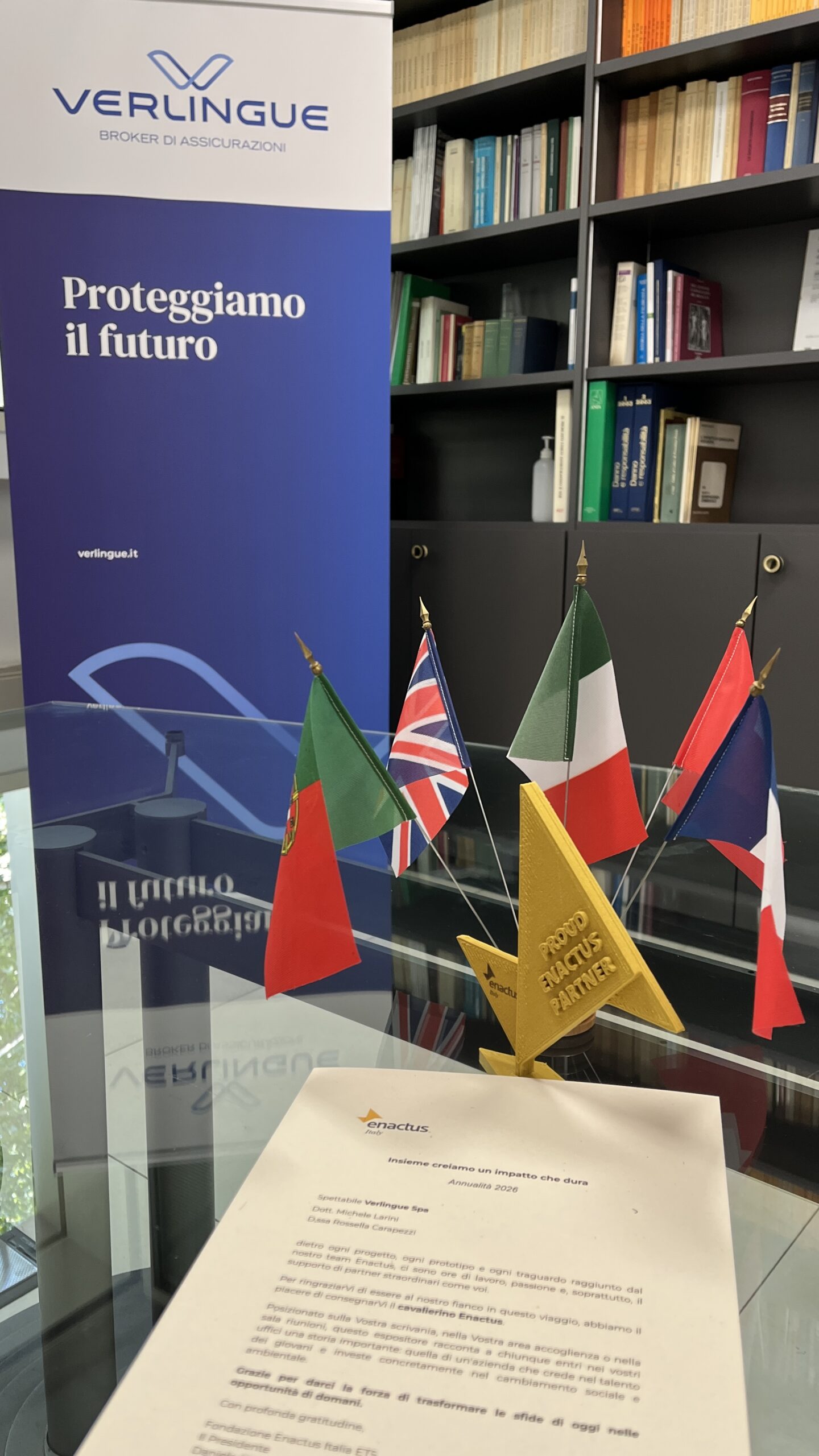
On Friday 17 July, at Verlingue’s Parma office, Brunella Airaudo, Vice-President of Enactus Italia, presented Verlingue with the “Enactus statuette”.
The statuette is a token of appreciation awarded to companies that support the Foundation’s work and the projects developed by young people within the Enactus network, with the aim of generating a positive social and environmental impact.
The presentation reinforces the value of the partnership between Verlingue and Enactus Italia and reflects their shared commitment to nurturing the talent of younger generations, helping them turn today’s challenges into opportunities for development and innovation.
Designed to be displayed in the company’s premises, the “Enactus statuette” symbolically conveys to employees and visitors Verlingue’s decision to support initiatives that bring together skills, entrepreneurship and responsibility towards the wider community.
News

Cyber Risk in Manufacturing SMEs: How to Protect Operations, Data and Business Continuity
Cyber Risk in Manufacturing SMEs: How to Protect Operations, Data and Business Continuity
From prevention to cyber insurance: a practical guide to reducing exposure to cyber threats
For manufacturing SMEs, cyber risk is no longer limited to computers, emails or digital archives. Today, a cyber attack can halt production lines, disrupt logistics, damage relationships with customers and suppliers, and generate costs that are difficult to absorb.
The growing integration of ERP systems, connected machinery, cloud platforms and supply chain networks has made cyber security a core element of business continuity. In this context, cyber risk is no longer just an IT issue: it is an operational, financial and reputational risk.
Ransomware, credential theft, phishing, software vulnerabilities and supply chain attacks are now concrete threats for businesses of every size. According to ENISA, ransomware, supply chain attacks and phishing remain among the main concerns for European organisations, with SMEs still showing uneven levels of preparedness. The Verizon Data Breach Investigations Report also highlights the central role of ransomware in cyber breaches, particularly within industrial sectors.
The first step: identifying critical assets
Effective cyber risk management starts with understanding what needs to be protected. Manufacturing SMEs should begin with a clear mapping of their critical assets: management systems, connected machinery, customer databases, orders, technical drawings, access credentials, backups, IT suppliers and cloud services.
Practical measures to reduce exposure
Managing cyber risk requires a structured approach based on prevention, monitoring and response capability. Key priorities for manufacturing SMEs include:
- regularly updating software, systems and industrial devices;
- separating IT and OT networks wherever possible;
- training employees to recognise fraudulent emails and phishing attempts;
- implementing frequent, isolated and tested backups;
- establishing an incident response plan;
- assessing the cyber exposure of critical suppliers.
Technology alone is not enough. Governance is equally important: who makes decisions during an attack? Who communicates with customers, suppliers, legal advisers, IT specialists and insurers? How long can production remain offline before the damage becomes critical?
Answering these questions in advance helps reduce downtime, financial losses and reputational impact.
The role of cyber insurance
Within this framework, cyber insurance can play a role, provided it forms part of a broader risk management strategy.
An appropriate policy can support businesses in the event of:
- business interruption;
- crisis management;
- third-party liability;
- data breaches;
- specialist incident response services during the critical first hours after an attack.
For this reason, companies should look beyond premiums and policy limits alone. Deductibles, exclusions, incident response services, minimum security requirements and alignment between coverage and actual business exposure all deserve careful assessment.
Protecting the ability to operate
For manufacturing SMEs, cyber risk should not be treated solely as a technical issue delegated to the IT department. It is a business-critical operational risk.
Addressing it effectively means protecting not only data, but also the company’s ability to manufacture, deliver and maintain market trust. In a sector where continuity, reliability and responsiveness are essential competitive factors, cyber risk management has become an integral part of industrial strategy.
News
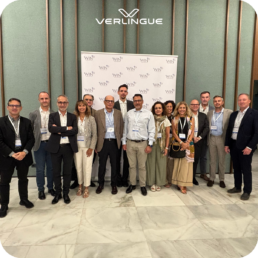
Verlingue at the WIN 2026 Convention
Verlingue at the WIN 2026 Convention
Brokers, insurers and providers discuss the evolution of the insurance market
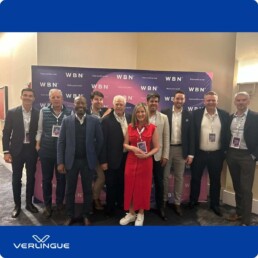
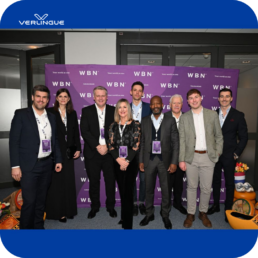
On 2 July 2026, Verlingue attended the WIN Convention 2026, the annual event bringing together brokers, insurers and providers from the WIN – Wholesale Insurtech Network to discuss the key transformations shaping the insurance market.
The event provided an opportunity for industry insight and debate on some of the most relevant issues currently facing the sector: from the changing role of insurance broking to the evolution of risk, technological innovation and the use of artificial intelligence in insurance processes.
For Verlingue, as a WIN partner, the Convention was an important opportunity to engage with the market and exchange views, gaining a closer understanding of the dynamics that are redefining the role of the insurance broker and the needs of businesses.
Insurance broking: specialisation and new models
In this context, the broker’s role is no longer limited to placing insurance solutions. Brokers are increasingly called upon to help companies understand more complex risks, design appropriate insurance programmes and identify solutions that are aligned with market developments.
The WIN Convention 2026 highlighted how the evolution of the sector requires greater integration between insurance expertise, data, digital processes and analytical capabilities.
MGAs: a model to watch
Under the traditional model, an MGA distributes and underwrites policies on behalf of an insurance company, usually assuming only a limited share of the risk. Integration with a captive changes this structure, allowing the organisation to participate more directly in the underwritten risk and in the technical performance of the portfolio.
In some cases, the model involves the use of a fronting carrier, which issues the policies and transfers part of the risk to the captive through reinsurance. This structure can offer greater flexibility in the design of insurance products, particularly in niche or highly complex markets.
At the same time, it is a model that requires careful consideration from a regulatory, capital and actuarial perspective. Direct participation in risk requires robust underwriting standards, appropriate control processes and a structured approach to compliance.
Technology, AI and insurance process management
For brokers, technology is becoming an increasingly important factor in information management, risk assessment and dialogue with insurers and clients. However, the adoption of digital tools must be supported by strong technical expertise and clear process governance.
M&A, leadership and integration
In this context, the ability to lead change becomes a central factor. Processes, people, technologies and corporate cultures must be coordinated consistently in order to generate value and preserve service quality.